

For many enterprises, cloud migration represents a major milestone in digital transformation. Moving applications, infrastructure, and workloads to the cloud can create opportunities to improve scalability, flexibility, and operational efficiency. But completing a migration does not automatically deliver those benefits.
The distinction is important. An organization can successfully migrate hundreds of workloads and still struggle with rising cloud costs, legacy application limitations, fragmented operations, and slow innovation. Technology has changed, but the underlying challenges remain.
Cloud migration is not the destination. It is the foundation for a broader transformation.
The enterprises positioned to realize sustained business value are those that connect migration with application modernization, intelligent cloud operations, and continuous optimization. Instead of managing these initiatives as separate projects, they treat cloud transformation as an interconnected lifecycle, where each stage supports and improves the next.
Cloud Migration Is a Starting Point, Not the Finish Line
Why “Cloud Complete” Can Create a False Sense of Progress
Cloud migration programs are often measured by tangible milestones: workloads transferred, applications deployed, data centers consolidated, or infrastructure decommissioned.
These achievements matter, but they primarily measure the completion of migration activities—not whether the organization is realizing the full business value of its investment.
A company might migrate a legacy application to AWS without changing its underlying architecture. Although the application now operates in the cloud, its performance limitations, maintenance requirements, and technical debt may remain largely unchanged.
Similarly, an enterprise may successfully transition infrastructure while retaining the same operational processes and organizational silos that previously limited agility.
In both cases, the migration project can be considered complete while the transformation remains unfinished.
The Limitations of Recreating the Data Center in the Cloud
Moving traditional infrastructure to the cloud without rethinking how applications are designed, managed, and optimized can reproduce familiar problems in a different environment.
- Workloads provisioned around fixed capacity assumptions may consume resources inefficiently.
- Applications designed for traditional infrastructure may fail to take advantage of cloud-native services.
- Operational teams may continue relying on manual processes that limit responsiveness and increase overhead.
As a result, enterprises can inherit the complexity of their previous environments while introducing new cloud management responsibilities and consumption-based costs. The value of cloud transformation comes not simply from where technology operates, but from how effectively the organization adapts its architecture, operations, and investment strategy to the new environment.
Why Siloed Cloud Migration and Modernization Limit Business Value
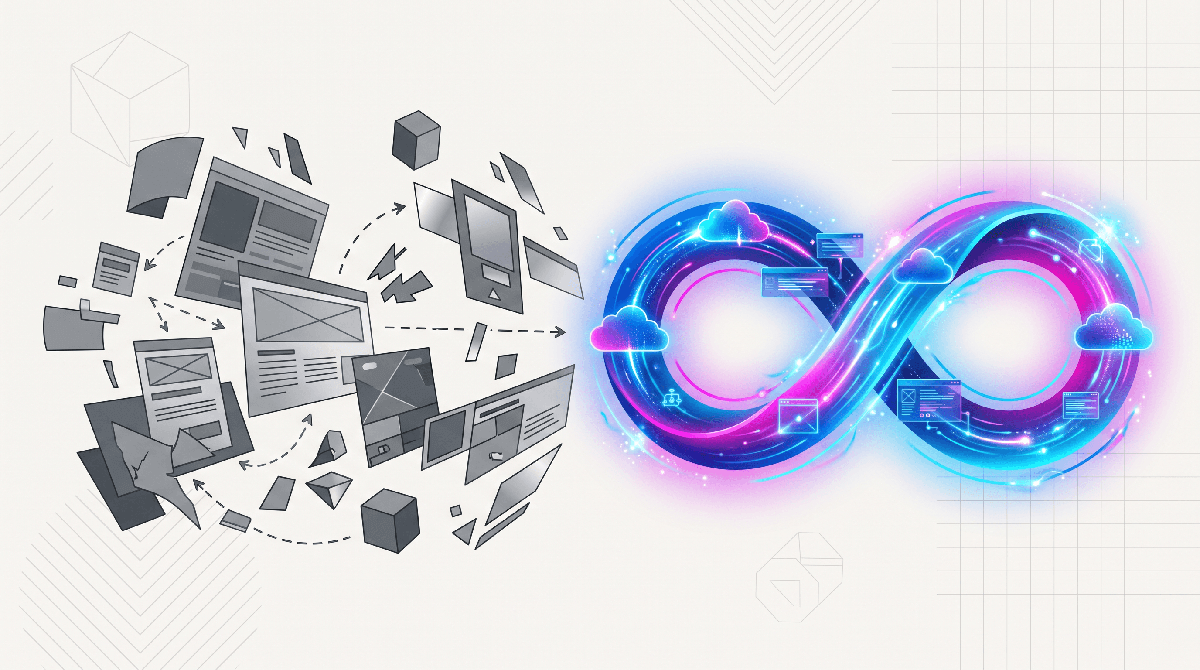
One of the greatest obstacles to realizing cloud value is fragmentation across the transformation lifecycle.
Migration, modernization, cloud operations, and optimization are frequently managed through separate initiatives, delivery teams, or technology partners. Each may have its own objectives, timelines, and measures of success.
This approach creates handoff friction that can undermine the business case for cloud transformation.
Migration Decisions Shape Future Modernization
Decisions made during migration directly influence what organizations can achieve afterward.
Consider an enterprise migrating a portfolio of business-critical applications. If migration planning focuses exclusively on minimizing disruption, without accounting for future modernization, the organization may preserve architectures that are expensive to maintain or difficult to scale.
Modernization teams then inherit decisions they must work around or reverse.
When migration and modernization are connected from the beginning, enterprises can evaluate application dependencies, identify technical debt, and establish modernization priorities before those limitations become more expensive to address.
This does not mean every application must be modernized during migration. It means modernization objectives should inform migration decisions, even when implementation occurs later.
Handoffs Create Technical and Operational Friction
Fragmentation creates similar challenges between transformation and ongoing operations.
A migration team may deliver an environment optimized for deployment speed, only to transfer responsibility to an operations team without sufficient visibility, automation, or governance.
The operations team must then establish monitoring, security controls, cost management practices, and support processes around an architecture it did not help design.
Meanwhile, optimization initiatives may be disconnected from application performance requirements and broader business priorities.
These gaps create duplicated effort, inconsistent accountability, and missed opportunities to improve efficiency.
For enterprise leaders, the implications extend beyond IT productivity. Fragmented transformation can delay time to value, reduce cost predictability, and limit the organization’s ability to respond to changing business requirements.
What a Unified Cloud Transformation Strategy Looks Like
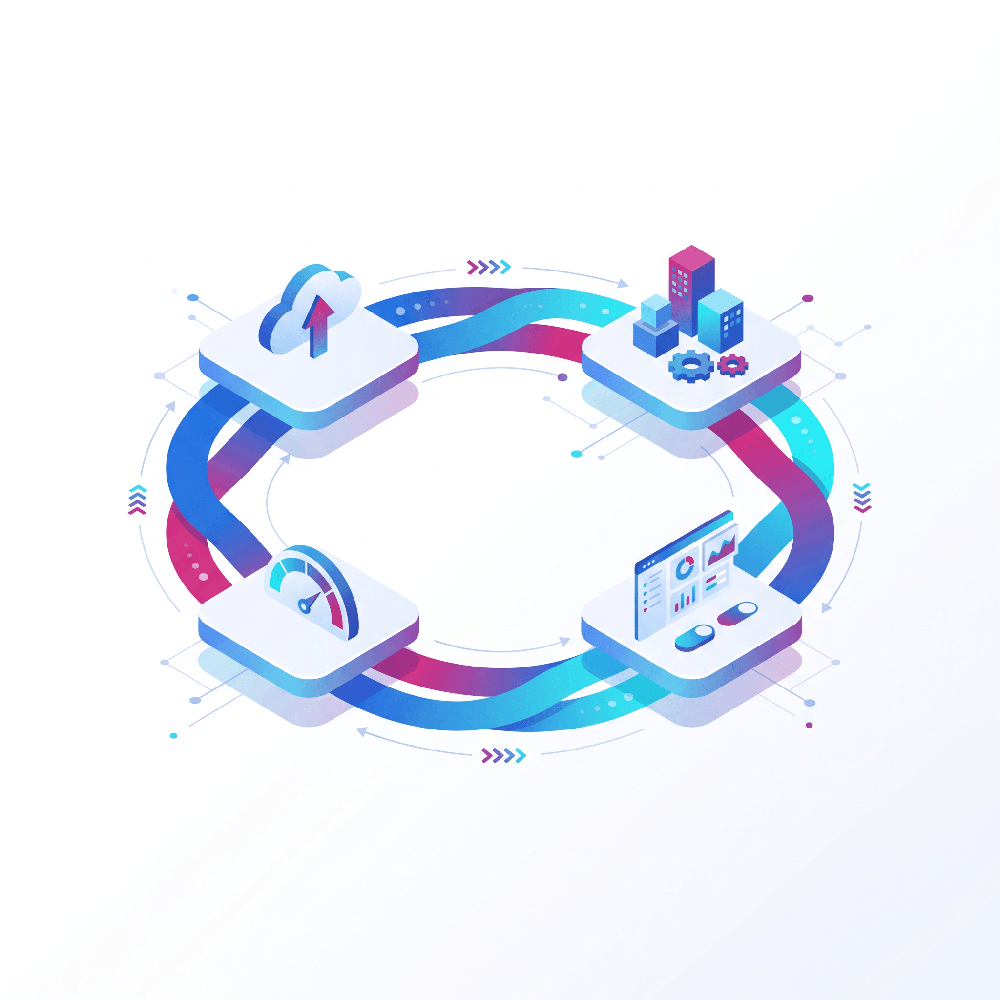
A unified cloud transformation strategy addresses these challenges by connecting migration, modernization, operations, and optimization through shared business objectives and coordinated decision-making.
These activities do not necessarily occur in a rigid sequence. In a mature enterprise environment, they often overlap, with insights from ongoing operations and optimization informing the next wave of migration and modernization.

Migrate
Establish the foundation with dependency-aware planning, security requirements, and workload placement that supports future modernization.
Modernize
Adapt applications through refactoring, containerization, database modernization, and cloud-native services prioritized by business value.
Operate
Build a cloud operating model with monitoring, automation, security, governance, and clear ownership across teams.
Optimize
Continuously improve cost, performance, and value with FinOps practices that connect consumption to business outcomes.
Migrate: Establish the Foundation
Effective migration begins with understanding the existing technology estate and identifying how cloud adoption supports business priorities.
Application dependencies, security requirements, performance expectations, and total cost of ownership should inform workload placement and migration planning.
The objective is not simply to move infrastructure, but to establish an environment capable of supporting future modernization and operational improvement.
Modernize: Adapt Applications for the Cloud
Application modernization helps organizations move beyond the limitations of legacy architectures.
Depending on business requirements, modernization may involve application refactoring, database modernization, containerization, architectural improvements, or adoption of cloud-native services.
These changes can improve scalability, support more efficient development and deployment, and reduce dependencies on aging technologies.
Modernization should be prioritized based on business value, technical constraints, and long-term application requirements rather than pursued as an isolated technology initiative.
Operate: Build a Cloud Operating Model That Can Evolve
Cloud environments require an operating model designed for continuous change.
Integrated monitoring, automation, security, governance, and incident management help organizations maintain reliability while managing increasingly complex environments.
The operating model should also establish clear ownership across infrastructure, application, security, and financial management teams.
When operational requirements are considered throughout migration and modernization, organizations can avoid creating environments that are technically successful but difficult to manage.
Optimize: Continuously Improve Cost, Performance, and Value
Cloud transformation does not end when an application reaches its target architecture.
Workload requirements, consumption patterns, business priorities, and available technologies continue to change.
Ongoing optimization helps enterprises evaluate resource utilization, improve performance, identify inefficiencies, and align cloud spending with business outcomes.
Financial Operations (FinOps) practices can strengthen this process by connecting technology consumption with financial accountability.
The result is a continuous improvement model rather than a series of disconnected cost-reduction exercises.
What Continuous Cloud Transformation Looks Like in Practice
The value of connected transformation becomes clearer when migration and operational planning are considered together.
Public Utility — Migration + Operations Continuity
A public utility organization engaged Trianz to modernize aging infrastructure while maintaining the reliability of services essential to its community.
- 96 virtual machines and 7 virtual desktop instances migrated to AWS
- Four automated waves on the Concierto platform
- Completed within an 18-week transformation timeline
- Managed cloud operations from day one into a 3-year steady state
Rather than treating migration and operational management as separate initiatives, operational requirements were built into the transformation program from the outset.
U.S. Energy Utility — Application Modernization
In a separate engagement, Trianz helped a U.S. energy utility modernize a mission-critical legacy application and establish a stronger foundation for ongoing delivery.
- .NET Framework 4.8 transitioned to .NET 8
- Database modernized with Amazon Aurora PostgreSQL
- Deployed on AWS Fargate
- Infrastructure automation and CI/CD pipelines introduced
Together, these engagements show that migration architecture, modernization capabilities, and the operating model must work toward common business objectives.
Cloud Transformation Requires Continuity, Not a Series of Projects
For CIOs and enterprise technology leaders, the challenge is no longer simply determining how to move workloads to the cloud.
It is ensuring that cloud investments continue creating value as business needs evolve.
Define the Business Outcome Before the Migration Finish Line
A successful cloud transformation strategy starts with a clear understanding of the outcomes the organization expects.
Those outcomes may include improving application resilience, accelerating product development, reducing technical debt, increasing operational efficiency, or creating greater cost predictability.
Rather than evaluating each transformation initiative independently, enterprises should set success measures that link technical progress to business performance.
For example, enterprises can evaluate migration milestones alongside modernization readiness, operational reliability, deployment efficiency, and cloud cost trends.
This broader perspective helps leadership determine whether cloud investments create measurable improvements—not simply complete planned activities.
Choose a Transformation Partner That Can See Beyond Migration
Achieving continuity also requires coordination across disciplines that have traditionally operated independently.
Enterprise leaders should consider whether their transformation approach establishes consistent visibility, governance, and accountability across migration, modernization, operations, and optimization.
A connected delivery model can help reduce friction between these activities and support more informed decisions throughout the lifecycle.
Trianz approaches this challenge through its Concierto platform, connecting capabilities across migration, application modernization, cloud operations, and optimization.
For organizations evaluating their next phase of cloud transformation, the opportunity is to move beyond individual project milestones and establish a coordinated strategy for sustained business value.
The true measure of cloud transformation is not how much infrastructure has moved. It is how effectively the organization continues to modernize, operate, and improve what comes next.
Migrate
Modernize
Operate
Optimize
Evaluate Your Cloud Transformation Strategy
Connect with Trianz | Concierto to explore how a unified approach to cloud migration, modernization, operations, and optimization can support your long-term business objectives.
Experience the Trianz Difference
Trianz enables digital transformations through effective strategies and excellence in execution. Collaborating with business and technology leaders, we help formulate and execute operational strategies to achieve intended business outcomes by bringing the best of consulting, technology expertise, and execution models.
Powered by knowledge, research, and perspectives, we enable clients to transform their business ecosystems and achieve superior performance by leveraging infrastructure, cloud, analytics, digital, and cybersecurity paradigms. Reach out to get in touch or learn more.